My beautiful Slavonia by the river Sava
Slavonski Brod is the seat of the tourist destination "My beautiful Slavonia by the river Sava" which includes 3 cities and 17 municipalities of Slavonian Posavina from the Brod-Posavina and Vukovar-Srijem counties. These are Slavonian cities/municipalities that have settlements along the Sava River and similar natural-geographical features and historical heritage.
Stara Gradiška Municipality
The history of the municipality of Stara Gradiška was quite turbulent. The baroque Fortress from 1715 was the location of a penitentiary, a prison and a concentration camp from 1942 to 1945, a period of the Independent State of Croatia. Its nature heritage includes the Prašnik forest vegetation reserve where you can find the largest and oldest English oak specimen in Europe.
Vrbje Municipality
The municipality of Vrbje counts seven settlements and the people of Vrbje (Vrbljani) are especially proud of the old custom of "vrepčanje" – a traditional game similar to baseball which has been played here for nearly 200 years.
Davor Municipality
The municipality of Davor is located at the Croatian border with Bosnia and Herzegovina, opposite the Vrbas river delta. Davor is a home town of the author Matija Antun Reljković and the famous footballer Ivica Olić, and the town's best known gathering is the Fishermen's Nights event ("Ribarske večeri") taking place in August.
Oriovac Municipality
There is a series of family households engaged in viticulture and welcoming tourists in the municipality of Oriovac. One of such examples is the tourist-family farm "Kereković" in the village of Živike, which, in addition to the gastronomic offer, also offers fishing. traditional games and boating on the Sava River. Religious tourists go on pilgrimages to the shrine of Virgin Mary of Kloštar ("Svetište Majke Božje Kloštarske") in Slavonski Kobaš, and the best known Oriovac gathering is Oriovita – wine rating event taking place in June.
Bebrina Municipality
The municipality of Bebrina is known for its Parish Church of St. Mary Magdalene built at the beginning of the 19th century. In addition to its architectural value the church also has artistic value expressed in the high level of church furniture ornamentation and a baroque and classicistic constructive assembly. Here is also an ornithological reserve of the Jelas reefs where a large number of birds nest.
Gornja Vrba Municipality
The area of this municipality holds the oldest findings of human life from the early Neolithic period. Metallurgic workshops were found on the Saloš site near Donja Vrba among the Baden culture settlement remains.
Klakar Municipality
A prehistoric archaeological site Paljevine is located in the Klakar municipality area, as well as the St. Jacob's Parish Church which is a protected 19th century cultural object. There is also a zoo ran by the Milec family with more than 70 animal species to visit in Ruščica. The best known cultural event is the children*s carnival "Mastibrk-Kolombrk" organized in February and protected as an immaterial good.
Oprisavci Municipality
The municipality area includes the protected landscape Gajna – a pasture situated along River Sava with abundant flora and fauna, known for growing indigenous breeds of cattle, black Slavonian pig and Posavina horses. The municipality's most important cultural event is the so-called "Razigrane grive" event held in Trnjanski Kuti in May and the most visited restaurant is the eco-ethno household "Kuća dida Tunje".
Sikirevci Municipality
Sikirevci were first mentioned as a settlement with a river crossing back in the 16th century. Here is nurtured the tradition of hand-making lace, which is protected as an immaterial good. From Sikirevci comes the father of the celebrated midfielder of the Croatian national football team - Ivan Rakitić.
Slavonski Šamac Municipality
In the municipality is the artificial lake Šoderica-Topolje with first category water, fisihing and hunting houses and scouting facilities. At the Vuksanović family agricultural household traditional souvenirs are made.
Babina Greda Municipality
The municipality of Babina Greda used to be a peasants' settlement and nowdays is known for "The Bećarfest", a traditional event "The White Horses" and The Days of Kulin, Cheese and Wine, all organized in June and The Meetings at The Farm held in August.
Štitar Municipality
In the municipality is in June a traditional event "Odavno smo graničari stari" held. This event is inspired by the history of living at a border. A majority of the members of one of the best known Croatian tamburica ensembles - "Najbolji hrvatski tamburaši" - comes from Štitar.
Cerna Municipality
The municipality of Cerna which settled at the meeting point of small rivers of Biđ and Berava and River Bosut is often called "little Venice" due to its nine bridges and numerous waterfalls. Cerna is also known for the family zoo Miško and its most important July event "Žetvene svečanosti" celebrating the end of harvest.
Gradište Municipality
In addition to its colourful archaeological history, Gradište also cherishes the tradition of silkworm breeding and pumpkin ornamentation.
Bošnjaci Municipality
The municipality of Bošnjaci is the home to the largest oak forest complex in Europe – Spačva basin ("Spačvanski bazen"). Tourists also like to visit the Forest Museum ran by the company Hrvatske šume.
Drenovci Municipality
The municipality of Drenovci is the heart of "cvelferija" - an area of the former twelfth ("cvelf") company from the period of the Military Frontier and fighting off the Turks. In the municipality is The Sanctuary of Our Lady of Šumanovci from the 14th century.
Gunja Municipality
In the area of the municipality is an archeological settlement dating back to the middle and late Bronze Age, Franciscan Church of St. James the Apostle from 1848 and the oldest mosque in Croatia built in 1963.
Nova Gradiška
The oldest baroque building in the city is the Church of St. Theresa of Avila from 1756, and the historical collections in the City Museum also have significant historical value. City tourist attractions which have to be mentioned are certainly the Promenade of Nova Gradiška Attractions and the park "Land of Games and Fun". On the Posavina educational trail which passes through the Nova Gradiška area is a number of interesting family-tourist farms.
Informacije:
Tourist Board Nova Gradiška
Slavonskih graničara 7
35400 Nova Gradiška
Tel./fax +385 35 361 494
E-mail:
tzgng@tzgng.hr
Web:
www.tzgng.hr
Županja
The permanent exhibition of the Homeland Museum is located in the border watch-tower, which at the time of the Military Border was a guardhouse with a porch, what is a unique example of Military Border defense culture in Croatia. In the city was raised a monument to the first football, because from here dates back to the end of the 19th century the tradition of playing football in Croatia. Through the Županja area passes The Golden Thread Road with many interesting tourist attractions.
Information:
Tourist Board Županja
Veliki kraj 66
32.270 Županja
Tel./fax 00385 32 832 711
E-mail: tz-zupanja@vk.t-com.hr
Web:
www.tz-zupanja.hr
Slavonski Brod
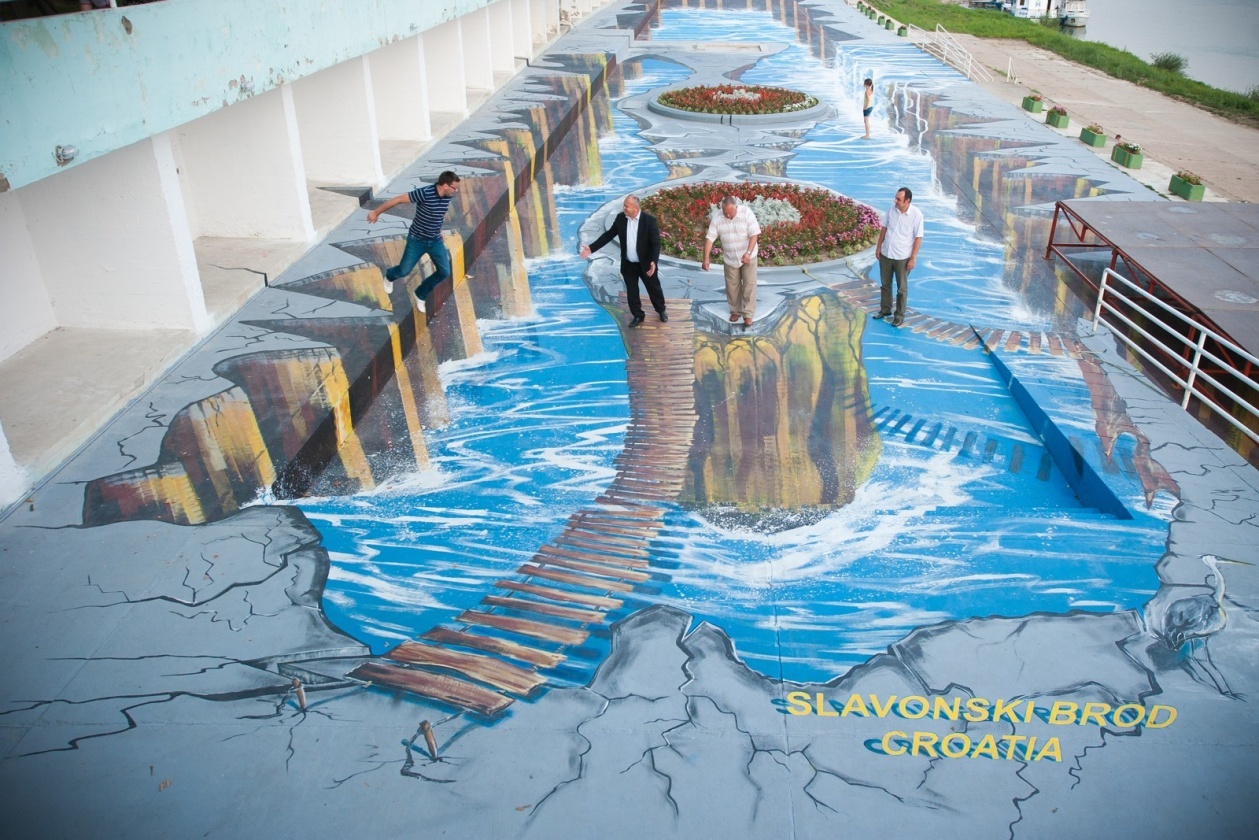
Slavonski Brod is located at the very border with Bosnia and Herzegovina. Its 18th century fortress bears witness to the grand history of fighting off the Turks. The world famous fairy tale writer Ivana Brlić Mažuranić wrote most of her stories in Slavonski Brod and her house is often visited by tourists. They also like to go to the unique Tambura Museum and take their photos on one of the largest world 3D paintings on the Sava promenade. A famous Croatian footballer Mario Mandžukić was born in Slavonski Brod where he started his career.
Find out more at:
www.tzgsb.hr




 © Copyright Tourist Board Slavonski Brod & InteS 2012 Sva prava pridržana/All rights reserved - Produced & Designed by InteS